
Learn when fluoride is recommended, how it helps prevent cavities, what parents should know about fluorosis, and how to avoid too much fluoride.
By Dr. Camila, Dentist. Last updated: September 2026.
If your child’s dentist has ever mentioned a fluoride treatment, you may have wondered:
“Does my child really need it? And is fluoride treatment actually safe for kids?”
As both a mom and a dentist, I completely understand that question.
When it comes to our children, we want to know exactly what is being used, why it is recommended, and whether there are any risks. And when the topic is fluoride, it is easy to come across conflicting information online—especially when dental fluorosis comes up.
So let’s talk about it simply and honestly.
In this post, I’ll walk you through fluoride treatment for kids, when it may be recommended, how it works, what parents should know about fluoride varnish, and how to prevent excessive fluoride exposure.
Is fluoride treatment safe for kids? Here’s what really matters
Yes. When fluoride is recommended based on a child’s needs and used appropriately, it is a safe and effective tool for helping prevent tooth decay.
But there is an important distinction here.
Safe does not mean that every child needs the same fluoride product, the same amount, or the same treatment schedule.
A child’s risk of cavities, age, dental health, oral hygiene, and other sources of fluoride all matter when deciding whether professional fluoride treatment is appropriate.
The American Academy of Pediatric Dentistry (AAPD) recognizes fluoride as an effective tool for preventing and controlling dental caries and recommends that fluoride use be tailored to each child’s individual needs.
So the idea that “every child needs a fluoride treatment every few months” does not tell the whole story.
The goal isn’t to use as much fluoride as possible. It’s to use the right amount in the right way.
What does fluoride treatment at the dentist do?
Fluoride helps strengthen tooth enamel and makes teeth more resistant to the processes that cause cavities.
It also supports remineralization of enamel and can help control the progression of certain early caries lesions.
That is why fluoride is an important part of cavity prevention for children.
But there is something I always like to remind parents:
Professional fluoride treatment does not replace brushing.
Think of it as an additional layer of protection when your child needs it.
Daily care at home is still essential: brush twice a day with fluoride toothpaste in the appropriate amount, limit frequent sugar exposure, and keep up with regular dental visits.
The AAPD specifically recognizes twice-daily brushing with fluoride toothpaste and fluoridated water as key ways to reduce childhood tooth decay.
Does every child need professional fluoride treatment?
Not necessarily.
This is one of the most important things I want parents to understand.
Professional fluoride treatment should be based on a child’s individual risk of developing cavities.
Children who are at higher risk may benefit more from professional fluoride treatments.
A child at low risk may not need additional professional fluoride beyond everyday preventive measures such as fluoride toothpaste and fluoridated water when available.
The AAPD’s caries-risk guidance emphasizes individualized preventive care based on factors such as age, clinical findings, protective factors, and caries risk.
So if two children the same age receive different recommendations from their dentists, that does not necessarily mean one of them is getting the wrong treatment.
Dental care should be individualized.
How is fluoride treatment given to children?
There are different professionally applied fluoride products, and the choice depends on the child’s age, cavity risk, dentition, and individual needs.
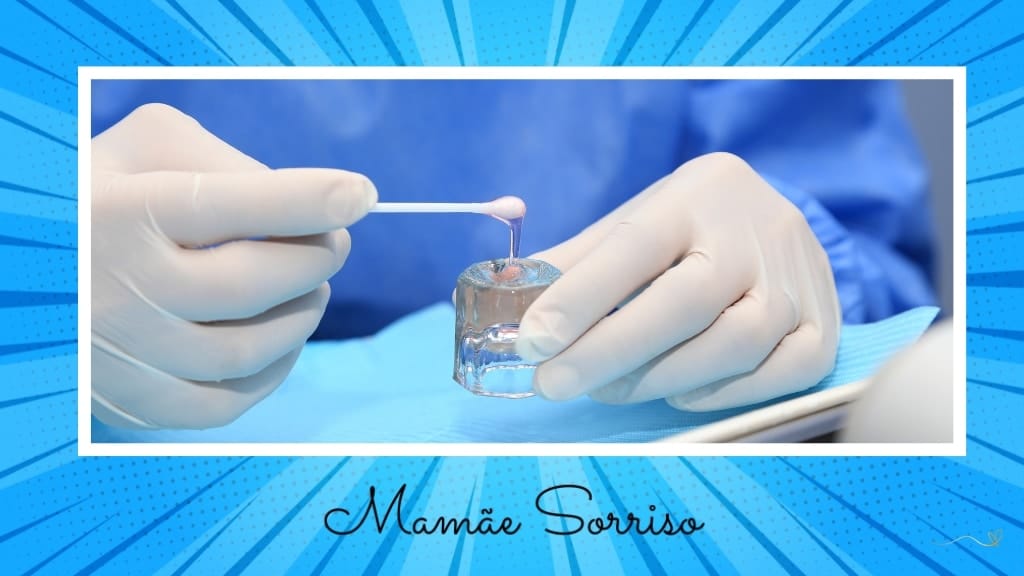
One of the most common options for young children is fluoride varnish.
A small amount is painted directly onto the teeth. The varnish sets when it comes into contact with saliva and keeps a concentrated amount of fluoride in close contact with the teeth for several hours.
The application is quick and requires very little cooperation, which makes fluoride varnish especially useful for young children.
For children younger than 6, the ADA recommends 2.26% fluoride varnish as the professionally applied topical fluoride agent in its clinical recommendations for children at risk of developing cavities.
Other professional fluoride products, such as certain gels, may be appropriate in specific situations, particularly for older children.
That is why I would not choose a fluoride product based on age alone.
Your dentist should determine which option is appropriate after evaluating your child.
What’s the difference between fluoride toothpaste and professional fluoride treatment?
This is a question I hear from parents all the time—and it makes perfect sense.
Fluoride toothpaste is used regularly in a small amount during everyday brushing.
Professional fluoride treatment, on the other hand, uses a product specifically designed to deliver a controlled amount of fluoride directly to the teeth.
That does not mean one is “good” and the other is “bad.”
They simply play different roles in cavity prevention.
What matters is your child’s overall fluoride exposure.
That is why it is helpful for your dentist to know what toothpaste your child uses, whether your household water is fluoridated, and whether your child receives fluoride from any other source.
When can a child get fluoride treatment?
There is no single age at which every child should automatically begin receiving professional fluoride treatments.
Fluoride can be part of cavity prevention from early childhood, but whether professional treatment is needed depends on the child’s individual risk and dental health.
What changes during the early years is which fluoride product is appropriate and how it should be used.
So I would not recommend following an online rule that says, “Every child needs fluoride treatment starting at X months.”
The right time is the time determined by your child’s dental professional after assessing their teeth and cavity risk.
How often should kids get fluoride treatment?
This is another question that does not have one answer for every child.
The recommended frequency can vary depending on cavity risk and the type of fluoride treatment being used.
Children at higher risk may need professional fluoride treatments more often, while children at lower risk may need less additional fluoride.
The AAPD recommends that professional fluoride therapy be based on caries-risk assessment. Its current guidance states that children at risk for caries should receive professional fluoride treatment at least every six months, with individual circumstances potentially calling for more frequent care.
So if your child’s dentist recommends a different schedule than another child’s dentist, that does not automatically mean something is wrong.
Cavity risk is individual.
Can fluoride treatment cause dental fluorosis?
This is probably one of the biggest concerns parents have.
Dental fluorosis can occur when a child takes in too much fluoride while permanent teeth are developing.
It may appear as changes in the appearance of the enamel, often as faint white lines or patches in milder cases.
But here is an important distinction:
Dental fluorosis is primarily associated with excessive fluoride ingestion during tooth development—not simply with receiving a professional fluoride treatment.
The AAPD emphasizes balancing the benefits of fluoride in preventing cavities with the risk of fluorosis from excessive fluoride ingestion during the early years of tooth development.
Professional fluoride varnish is applied in a small, controlled amount. The ADA also notes that fluoride varnish is widely used for young children as part of cavity prevention.
So this is not about being afraid of fluoride.
It is about using fluoride appropriately.
How can parents prevent too much fluoride exposure?
The best place to start is by knowing where fluoride comes from in your child’s daily routine.
Sources can include:
- fluoride toothpaste;
- fluoridated drinking water;
- professional fluoride treatments;
- certain dental products;
- fluoride supplements when specifically indicated.
This does not mean that we should try to eliminate fluoride from a child’s life.
It simply means that your dentist should know about these different sources when deciding whether additional fluoride is appropriate.
And at home, one very important habit is supervising young children while they brush so they do not swallow large amounts of toothpaste.
Is fluoride toothpaste safe for kids?
Yes.
When used in the appropriate amount, fluoride toothpaste is one of the most important tools for preventing cavities in children.
The AAPD recommends twice-daily toothbrushing with an age-appropriate amount of fluoride toothpaste for children.
The key is how much toothpaste you use, not avoiding fluoride altogether.
You do not need to cover the entire toothbrush with toothpaste.
For young children, only a small amount is needed, and an adult should supervise brushing.
If you are unsure how much toothpaste your child should use, ask your pediatric dentist.
What should my child do after a fluoride treatment?
This is one of those situations where I always recommend:
Follow the instructions given by the dental professional who applied the fluoride.
Why?
Because after-care instructions can vary depending on the product used.
With fluoride varnish, for example, the material temporarily remains on the teeth, and your dentist may give you specific instructions about food, drinks, brushing, or other care for the following hours.
There is no single after-care rule that applies to every fluoride product.
And if you leave the dental office and realize you cannot remember the instructions, please ask.
It is much better to double-check than to spend the evening wondering whether you are doing something wrong.
What if my child accidentally swallows some fluoride?
Small accidental exposures can happen, especially with young children.
That is one reason professional fluoride treatment should be performed using an appropriate amount and technique.
If your child accidentally swallows a significant amount of a fluoride-containing product, especially if you do not know how much was swallowed, contact a healthcare professional or your local poison control center for guidance.
Do not make your child vomit unless a healthcare professional specifically tells you to do so.
And at home, keep fluoride-containing products out of children’s reach.
Does fluoride treatment hurt?
Usually, no.
Professional topical fluoride treatment generally does not require anesthesia and is a quick procedure.
With fluoride varnish, the product is simply painted onto the teeth.
For many children, the hardest part is not the fluoride itself. It may be sitting still, keeping their mouth open, or experiencing a new sensation.
That is why the way we talk about dental treatment matters too.
Instead of saying:
“It won’t hurt!”
You can say:
“I’m going to put a little bit of something on your teeth to help keep them strong.”
When we stay calm and positive, it can be easier for children to feel safe and comfortable.
When can professional fluoride treatment be especially helpful?
Professional fluoride treatment may be particularly helpful when a child has a higher risk of developing cavities.
For example, risk may be higher when a child has:
- recent or active cavities;
- difficulty maintaining good oral hygiene;
- frequent exposure to sugary foods or drinks;
- certain conditions that make plaque control more difficult;
- changes in saliva flow;
- special healthcare needs that affect oral hygiene;
- early caries lesions that are being monitored.
But having one of these factors does not automatically mean a child needs fluoride treatment on a specific schedule.
The overall assessment is what guides the recommendation.
Is fluoride treatment safe for kids? What I want you to take away from this post
If I could sum up everything we talked about in one simple idea, it would be this:
Fluoride itself isn’t the problem. The goal is using the right amount in the right way.
When appropriately recommended, fluoride is an important tool for preventing childhood cavities.
But there is no one-size-fits-all fluoride schedule for every child.
Your child’s age, cavity risk, diet, oral hygiene, toothpaste, exposure to fluoridated water, and other sources of fluoride all need to be considered together.
So if your child’s dentist recommends a fluoride treatment, don’t be afraid to ask:
“Why does my child need this treatment?”
“Which fluoride product are you using?”
“How often does my child need it?”
“What is my child’s current cavity risk?”
Those questions do not bother a good dentist. Quite the opposite.
I believe a good dental visit is also one where parents understand why we are recommending each part of their child’s care.
The goal isn’t to fill your child’s routine with unnecessary treatments.
It is to find the right level of prevention to protect that little smile.
With love,
Dr. Camila – Mommy Smile ❤️
Make Brushing Time Fun (and Stress-Free!)
Turn your child’s brushing routine into a magical 2-minute experience No more struggles — just smiles and healthy habits!
START THE 2-MINUTE TIMERLoved by parents & kids
FAQ – Frequently Asked Questions About Fluoride Treatment for Kids
1. Is fluoride treatment safe for kids?
Yes. When professionally recommended and properly applied, fluoride treatment is considered a safe and effective way to help prevent cavities. The need for treatment should be based on the child’s individual cavity risk.
2. Does every child need professional fluoride treatment?
No. The need depends on the child’s cavity risk, age, dental health, and other sources of fluoride.
3. Is fluoride varnish safe for babies and young children?
Fluoride varnish is widely used to help prevent cavities in young children. For children younger than 6, the ADA recommends 2.26% fluoride varnish among professionally applied topical fluoride agents for children at risk of developing cavities.
4. Can fluoride treatment cause dental fluorosis?
Dental fluorosis is associated with excessive fluoride ingestion while permanent teeth are developing. Properly applied professional fluoride varnish is not, by itself, considered a reason to avoid fluoride treatment.
5. How often should my child get fluoride treatment?
There is no universal schedule for every child. The recommended interval depends primarily on cavity risk and the type of fluoride treatment being used.
6. My child already uses fluoride toothpaste. Do they still need professional fluoride treatment?
Possibly. Fluoride toothpaste is an essential part of everyday cavity prevention, but children at higher risk of cavities may benefit from additional professional fluoride treatment.
7. Is the fluoride in toothpaste the same as the fluoride used at the dentist?
Both provide fluoride, but they are used differently. Fluoride toothpaste is used regularly in small amounts during brushing, while professional fluoride treatment uses a specific product applied in a controlled amount based on the child’s needs.
8. What happens if my child swallows fluoride?
Small accidental exposures can happen, especially with young children. However, swallowing a significant amount or an unknown quantity of a fluoride-containing product should be discussed with a healthcare professional or poison control center.
9. Can I choose not to have fluoride treatment for my child?
This is something worth discussing with your child’s dentist after understanding why the treatment was recommended and your child’s individual cavity risk. Ask what benefit the treatment may provide in your child’s specific situation and what other preventive options are available.
Posts you’ll love
Have You Visited Joia da Mamãe?
A magical place full of love, motherhood, and fun adventures!
Educational stories and magical adventures for kids
Games, parenting tips, fun activities, and family-friendly content
Discover amazing adventures with Tino Around the World and special content for the whole family!
Stories • Activities • Music • Fun • Learning
If you enjoyed this content from Mamãe Sorriso, you’ll LOVE Joia da Mamãe!
A magical universe filled with adventures, learning, and love!
Because learning through play makes childhood even more magical!