
You take care of your child’s teeth with love — but you might be making mistakes without even realizing it.
Discover the most common myths about children’s oral hygiene and what science (and a mom dentist) actually recommends.
By Dr. Camila, Pediatric Dentist — Updated on April 16, 2026
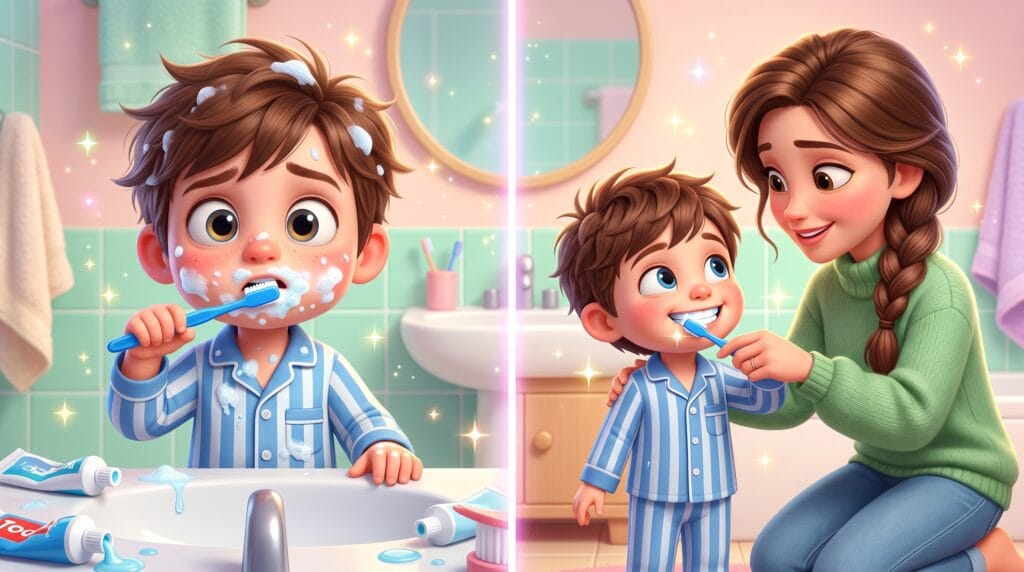
I know how much you care about your child’s health.
And that’s exactly why I need to tell you something:
Many things parents believe are “right”… are actually myths.
As both a mom and a pediatric dentist, I’ve heard it all in my office.
From the classic “baby teeth fall out anyway, no need to care for them”
to the fear of using fluoride.
These beliefs come from everywhere — grandparents, WhatsApp groups, and even well-meaning professionals who aren’t oral health specialists.
So today, let’s clear this up once and for all.
Here are the 8 most common myths about children’s oral hygiene — and the truth behind each one.
🦷 8 Myths About Children’s Oral Hygiene
1. “Baby teeth don’t need care — they’ll fall out anyway”
Truth: care starts before the first tooth appears
It may sound harmless… but it’s not.
Baby teeth play a very important role.
They guide permanent teeth and support speech and chewing.
And yes — cavities in baby teeth hurt.
They can even affect the permanent tooth developing underneath.
Oral hygiene should begin before the first tooth even appears.
Use a damp cloth to gently clean your baby’s gums from the start.
When the first tooth erupts (usually between 6–12 months), introduce brushing:
extra-soft bristles + a rice-sized amount of toothpaste.
2. “Young children don’t need to floss”
Truth: flossing begins when teeth start touching
When teeth become close together, a toothbrush alone can’t reach between them.
And guess what happens?
Cavities often develop right there… between the teeth.
This is very common in children.
Around ages 2–3, flossing should become part of the routine.
Kid-friendly floss picks can make it easier.
And an important detail:
parents should assist until around ages 8–10.
3. “Fluoride is harmful — better to avoid it”
Truth: in the right amount, fluoride is the best defense against cavities
This fear has grown a lot… but it doesn’t match scientific evidence.
Fluoride strengthens enamel and protects against cavities.
The key isn’t avoiding it — it’s using the right amount:
- under 3 years: rice-sized amount
- ages 3–6: pea-sized amount
Always supervise brushing.
Teaching your child to spit (not swallow) makes a big difference.
4. “Pacifiers and thumb sucking don’t harm teeth”
Truth: after age 3, they can affect oral development
In the early months, these habits are normal and comforting.
But when they continue for too long… they begin to affect how the mouth develops.
They may cause:
- open bite
- teeth pushing forward
- changes in the palate
If it’s hard to stop, you don’t have to struggle alone.
A pediatric dentist can help with gentle, effective strategies.
Make Brushing Time Fun (and Stress-Free!)
Turn your child’s brushing routine into a magical 2-minute experience 💜 No more struggles — just smiles and healthy habits!
⏱️ START THE 2-MINUTE TIMER💡 Loved by parents & kids 💖
5. “I only take my child to the dentist when there’s pain”
Truth: the first visit should happen around the first birthday
Waiting for pain usually means it’s already too late.
The first dental visit should happen around your child’s first year.
And it’s not just to “check if everything is okay.”
It’s when:
- problems are prevented
- important care is provided
- your child builds trust with the dentist
The ideal? Check-ups every 6 months.
6. “Natural foods don’t cause cavities”
Truth: it’s not just processed sugar you need to worry about
Fruits, honey, and natural juices… they all play a role too.
The issue isn’t just the food — it’s the frequency.
Constant snacking increases the risk.
Simple tips:
- offer these foods during main meals
- avoid them before bedtime
- if brushing isn’t possible, offer water afterward
Small changes make a real difference.
7. “The more expensive the toothbrush, the better”
Truth: how you use it matters more than the price
There’s no need to overcomplicate things.
A good children’s toothbrush is simple:
- small head
- soft bristles
- easy grip
It doesn’t need to be expensive or electric.
And remember:
replace it every 3 months (or after illness).
Consistency matters more than brand.
8. “Mouthwash can be used at any age”
Truth: for young children, it’s usually unnecessary
For small children, mouthwash is generally not recommended.
Many contain alcohol or fluoride levels that are not appropriate for this age group.
There’s also a risk of swallowing.
And they can mask problems that need attention.
If used, it should only be under a pediatric dentist’s guidance, and with age-appropriate products.
💖 Conclusion
Now you know what truly matters when it comes to children’s oral hygiene.
And more important than knowing… is putting it into practice, little by little.
✔ Start oral care before the first tooth
✔ Introduce floss when teeth begin to touch
✔ Don’t fear fluoride — use it correctly
✔ Visit the dentist before problems appear
And let me ask you…
Did you believe any of these myths before? 👀
Feel free to share, no judgment here 💕
This is a safe space for parents who simply want to do their best.
Warm hugs,
Camila, Mommy Smiles 💖
Mom, your idea is always welcome!
Want to suggest topics, questions, or subjects you’d love to see here on Mommy Smile? I’d truly love to hear from you 💕
Send your suggestion or message via email:
✉️ [email protected]📚 Posts you’ll love
Have you already discovered Jóia da Mamãe?
A gentle space for names, motherhood, and self-love 💕
Name meanings and heartfelt inspiration to help you choose with love
Content that embraces motherhood with care, warmth, and gentleness
Mamãe Sorriso and Jóia da Mamãe walk side by side:
information, care, and love throughout every stage of motherhood.
If you care for oral health with Mamãe Sorriso, you’ll fall in love with the universe of Jóia da Mamãe 💕
💎 Visit Jóia da Mamãe🌸 Information, care, and love for the whole family