
Discover the durability, care and everything about children’s aesthetic restorations.
By Dr. Camia, dentist.
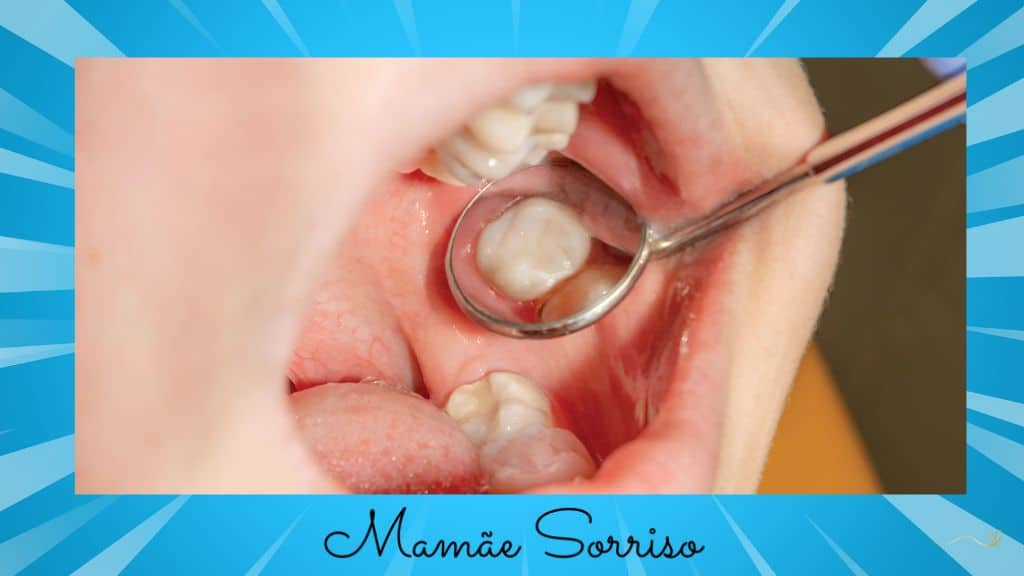
“Doctor, is this resin worth it? How long will it last?” This is one of the questions I hear most often in my office! As a mother, I completely understand the concern about investment and durability.
The truth is that the durability of resin restorations in children depends on several factors that many parents are unaware of. It’s not just a matter of the “brand” or “quality” of the material, but rather a combination of care, habits, and individual characteristics.
In this comprehensive guide, I’ll answer all your questions about how long a resin filling in children lasts, what factors influence its durability, and what you can do to maximize the lifespan of your child’s fillings.
How Long Does a Resin Filling in a Child Last? The Complete Answer
The answer every parent wants to hear: resin fillings in baby teeth last between 2 and 5 years, while in young permanent teeth they can last 5 to 10 years or more. But don’t worry, I’ll explain all the details!
Durability varies significantly depending on the child’s age, tooth location, and subsequent care. In very young children (2-4 years old), it typically lasts less due to eating habits and hygiene difficulties.
For permanent teeth in older children (8+ years), durability tends to be greater, as they are now better able to cooperate with care and have more controlled habits.
What is Children’s Resin Restoration and How Does It Work?
Resin restoration is a procedure in which we use a tooth-colored plastic material to “rebuild” the area damaged by decay. It’s like a “putty” that hardens under a special light.
Adapted Definition for Parents
Imagine your child’s tooth is like a little house with a damaged part. Resin is like a “special cement” that we use to repair this part, making the tooth strong and beautiful again.
The material is applied layer by layer, and each layer is “hardened” with a special blue light. Finally, we polish it to make it as smooth and shiny as your other teeth.
How the Procedure is Performed on Children
The procedure on children requires special techniques to ensure compliance and comfort. First, we apply local anesthesia (when necessary) so the child feels no discomfort.
Next, we carefully remove all decay and prepare the tooth to receive the resin. We keep the field dry with a suction cup and adequate insulation.
The resin is applied in stages, always talking to the child and explaining each step in a playful way.
Differences from the Adult Technique
With children, we need to be faster and use techniques that maintain attention and cooperation. We use absolute isolation whenever possible to protect the child and ensure quality.
The materials chosen are specific to pediatric dentistry, considering the anatomy of baby teeth and the specific needs of the age group. A behavioral approach is crucial to the success of the procedure.
For Whom Is Resin Restoration Recommended in Children?
Resin restoration is recommended for most cases of tooth decay in children, but there are specific criteria that determine when it is the best option.
Recommended Minimum Age
There’s no strict minimum age, but we can generally perform resin restorations on children as young as 3 or 4 years old, when they can already cooperate at least a little. For younger children, we evaluate each case individually.
For babies and very young children, we sometimes opt for alternative materials like glass ionomer, which is more moisture-tolerant and doesn’t require as much cooperation.
Cases Where It Is Indicated
The resin is ideal for:
- Small and medium cavities in anterior and posterior teeth
- Cases where aesthetics are important (front teeth)
- Collaborative children who can handle dry mouth
- Restorations that do not receive much chewing force
- When there is sufficient tooth structure to support the resin
When Other Materials Are Better
In some cases, other materials may be more suitable:
Glass ionomer: For very young or uncooperative children, cavities close to the gums, or as a base for large restorations.
Compomer: As an intermediate option between resin and ionomer, offering fluoride release and greater technique tolerance.
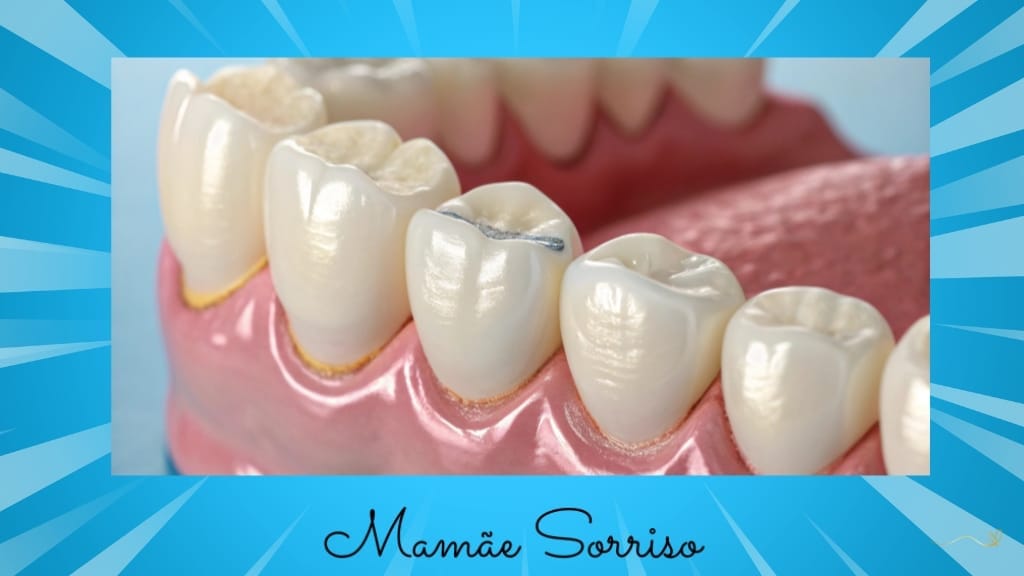
There are different restorative materials available for children, each with specific characteristics that influence durability and indication.
Composite Resin
It’s the most aesthetically pleasing and durable material, with excellent durability when used correctly. It requires refined technique and rigorous moisture control to ensure longevity.
The variety of available colors allows for perfect mimicry of natural teeth. It is the first choice for aesthetic restorations in anterior teeth.
Glass Ionomer
A material that continuously releases fluoride, helping prevent new cavities. It’s more moisture-tolerant and requires fewer technical requirements, making it ideal for young children.
Although less aesthetically pleasing than composite, it’s an excellent option for back teeth in children who aren’t very cooperative. Its durability is shorter, but still satisfactory.
Compomer
It combines the characteristics of resin and ionomer, offering fluoride release with better aesthetics than traditional ionomer. It’s an interesting intermediate option.
It is well accepted by children and the application technique is simpler than conventional resin.
| Características | ✨Resina Composta | 🛡️Ionômero de Vidro | 🔗Compômero | ⚡Amálgama |
|---|---|---|---|---|
| Estética | Excelente – Mimetiza perfeitamente o dente | Regular – Mais opaco e menos natural | Boa – Melhor que ionômero tradicional | Ruim – Cor prateada muito visível |
| Durabilidade em Dente de Leite | 3-5 anos | 2-4 anos | 2.5-4 anos | 4-6 anos |
| Durabilidade em Dente Permanente | 5-10+ anos | 3-6 anos | 4-7 anos | 10-15+ anos |
| Resistência ao Desgaste | Excelente – Muito resistente | Regular – Mais suscetível ao desgaste | Boa – Intermediária | Excelente – Extremamente resistente |
| Liberação de Flúor | Não libera | Excelente – Liberação contínua | Muito boa – Liberação moderada | Não libera |
| Tolerância à Umidade | Baixa – Campo deve estar seco | Excelente – Tolera saliva | Boa – Moderadamente tolerante | Muito boa – Tolera bem umidade |
| Facilidade de Aplicação | Técnica mais exigente | Muito fácil – Ideal para crianças pequenas | Intermediária – Mais fácil que resina | Boa – Técnica tradicional bem estabelecida |
| Idade Mínima Recomendada | 3-4 anos (criança colaborativa) | Qualquer idade – Até bebês | 2-3 anos | 4-5 anos (colaboração essencial) |
| Custo | R$ 300-800 | R$ 200-500 | R$ 250-600 | R$ 150-400 |
| Prevenção de Cárie Secundária | Apenas pela técnica adequada | Excelente – Flúor protege continuamente | Muito boa – Proteção moderada | Boa – Vedamento marginal eficaz |
| Indicação Principal | Dentes anteriores e crianças colaborativas onde estética é prioridade | Crianças pequenas, dentes posteriores e alto risco de cárie | Opção intermediária para crianças moderadamente colaborativas | Molares posteriores com grande destruição onde durabilidade é prioridade |
How Many Years Does a Resin Restoration Last in Children?
Durability varies significantly depending on the type of tooth and the child’s age. I’ll explain the realistic expectations for each situation.
Durability in Baby Teeth (2-5 years)
In baby teeth, resin restorations last an average of 2 to 5 years. This variation occurs because temporary teeth have different anatomical characteristics and are constantly changing.
Baby teeth tend to have longer-lasting restorations (3-5 years) because they receive less chewing force. Baby molars, on the other hand, may need replacement in 2-4 years.
It is important to remember that the restoration often “lasts” until the tooth naturally changes, which is the ideal scenario!
Durability in Young Permanent Teeth (5-10 years)
Permanent teeth of children and adolescents offer greater durability for resin restorations, which can last 5 to 10 years or more with proper care.
More mature tooth structure and improved oral hygiene contribute to this increased longevity. Small fillings can last decades without needing replacement.
Factors Influencing Duration
Several factors determine how long the filling will last in your child’s mouth:
Restoration size: Smaller restorations last longer than larger ones Location: Anterior teeth experience less wear than posterior teeth Occlusal force: Children who clench their teeth experience faster wear Oral hygiene: Good hygiene significantly extends the life of restorations
🌸 Spaces that inspire and care
Discover other projects created with delicacy and purpose, to welcome each stage of motherhood with affection:
- 💎 Mommy’s Jewel Blog – Name inspiration, care and self-esteem for the maternal journey.
- 🎵 Enchanted Smile Channel – Charming songs and stories that teach with lightness.
Factors That Influence the Durability of Children’s Resin
Understanding what affects the lifespan of restorations helps you take steps to extend their lifespan and protect your investment in your child’s oral health.
Child’s Age
Younger children (2-5 years old) tend to have shorter-lasting restorations due to difficulties in controlling habits and hygiene. Their still-developing motor coordination makes proper brushing difficult.
Older children (6+ years) are able to cooperate better with care and are less prone to harmful habits such as biting nails or chewing objects.
Tooth Location
Anterior teeth: Receive less chewing force, resulting in longer-lasting restorations. Aesthetics are a priority in this region.
Back teeth: Subjected to intense forces during chewing, they can wear out more quickly. They require more resistant materials.
Restoration Size
Small (Class I) fillings tend to last longer because they retain more natural tooth structure. The tooth becomes stronger and more resilient.
Large restorations (classes II, III, IV) remove more tooth structure, leaving the tooth more fragile and susceptible to fractures of the restoration or the tooth itself.
Eating Habits
The child’s diet directly impacts the longevity of restorations:
- Hard foods (candy, ice) can cause fractures
- Sticky foods (caramel, chewing gum) can “pull” the restoration
- Acidic drinks (soft drinks) can cause wear on the edges
- Excess sugar promotes secondary cavities around the restoration
Oral hygiene
Good oral hygiene is crucial for its durability. Bacterial plaque buildup around the edges of the restoration can cause infiltration and secondary caries.
Children with good hygiene under parental supervision have restorations that last significantly longer. Flossing is especially important.
Bruxism and Parafunctional Habits
Children who grind their teeth (bruxism) or have habits such as biting their nails, biting objects or sucking their thumbs exert excessive force on their restorations.
These habits can cause fractures, premature wear, or even complete loss of the restoration. It’s important to identify and treat these habits early.
Complement your reading: Childhood Bruxism: Causes and Treatment to Protect Your Child’s Smile
Follow more posts about children’s oral health on the blog
Essential Care to Extend Durability
With proper care, you can help your child’s fillings last as long as possible, saving money and avoiding further procedures.
Proper Nutrition
Nutrition plays a fundamental role in the longevity of restorations:
Avoid very hard foods:
- Chewing ice
- Very hard bullets
- Bones and meat with bone
- Nuts and chestnuts in shell
Beware of sticky foods:
- Caramels and soft candies
- Chewing gum (especially the “stickier” ones)
- Chewy sweets
- Very sticky dried fruits
Specific Oral Hygiene
Hygiene must be adapted to protect the restorations:
Proper brushing:
- Use a soft-bristled brush
- Smooth movements, without excessive force
- Pay special attention to the margins of restorations
- Brush at least twice a day
Using dental floss:
- Essential for cleaning between your teeth
- Be careful not to “pull” the restoration
- Move gently in the restored areas
Habits to Avoid
Some habits can compromise the durability of restorations:
- Nail biting – causes harmful lateral forces
- Biting on objects (pens, pencils) – can fracture fillings
- Using your teeth as a tool (opening packages)
- Grinding or clenching your teeth – causes excessive wear
- Chewing ice – can cause thermal shock fractures
Detailed Care List
To maximize the durability of your child’s restorations:
- ✅ Supervise brushing until age 8-10
- ✅ Use age-appropriate fluoride toothpaste
- ✅ Have check-ups every 6 months
- ✅ Avoid very hard or sticky foods
- ✅ Use a mouth guard if your child plays sports
- ✅ Maintain a balanced diet with little sugar
- ✅ Teach correct brushing and flossing techniques
- ✅ Treat parafunctional habits (bruxism, nail biting)
When Should I Change My Child’s Dental Composite?
Knowing when a filling needs to be replaced is essential to maintaining your child’s oral health and avoiding major complications.
Signs of Wear
Natural wear and tear occurs over time, but some signs indicate the need for replacement:
Excessive surface wear: When the restoration is too “low” in relation to the adjacent teeth, it can affect chewing and cause problems with the joint.
Loss of anatomy: If the restoration can no longer fulfill its masticatory function adequately, it needs to be redone.
Color Changes
Color changes are common in resin restorations, especially in children:
Superficial stains: Can be removed with professional polishing, do not necessarily indicate replacement of the restoration.
Deep darkening: When the color does not improve with professional cleaning and affects aesthetics, especially in front teeth, it indicates the need for replacement.
Fractures or Chips
Any fracture or chip in the restoration should be evaluated by the dentist:
Small fractures: Can be repaired without replacing the entire restoration, depending on the location and extent.
Large fractures: Generally require complete replacement of the restoration to ensure adequate sealing.
Infiltrations (Secondary Caries)
Secondary caries is one of the main causes of restoration replacement:
Signs of infiltration: Darkening of the margins, sensitivity or pain may indicate the entry of bacteria under the restoration.
Recurrent decay: When new decay forms around the filling, it is necessary to remove everything and make a new filling.
List of Warning Signs
See a dentist immediately if you notice:
- 🚨 Spontaneous pain or excessive sensitivity
- 🚨 Visible fracture in the restoration
- 🚨 Darkening at the edges of the restoration
- 🚨 Restoration mobility (feels “loose”)
- 🚨 Roughness or irregularities on the surface
- 🚨 Bleeding gums around the filling
- 🚨 Persistent bad breath in the region
- 🚨 Difficulty cleaning the restored area
Is it Worth Investing in Resin for Baby Teeth?
This is one of the most frequently asked questions in my office. The answer depends on several factors, which I’ll explain to help you make your decision.
Aesthetic and Functional Benefits
Resin restoration in baby teeth offers important benefits:
Preserved aesthetics: Especially important for front teeth, it maintains the child’s natural smile and prevents self-esteem problems.
Masticatory function: Restored teeth maintain adequate chewing capacity, which is essential for digestion and development.
Speech development: Intact teeth are essential for the correct pronunciation of various sounds.
Cost-Benefit
The initial investment may seem high, but consider the long-term benefits:
Prevention of major problems: A filling can prevent the need for more complex treatments such as root canals or extractions.
Space maintenance: Avoids the need for space-maintaining appliances if the tooth is lost prematurely.
Quality of life: A child without pain and with a beautiful smile has a better quality of life and self-esteem.
Alternatives for Every Situation
When it is worth investing in resin:
- Anterior teeth (fundamental aesthetics)
- Small and medium cavities
- Collaborative child
- Sufficient time until natural change (more than 2 years)
When to consider other options:
- Teeth very close to natural change (less than 1 year)
- Very extensive destruction
- Very uncooperative child
- Significant budget constraints
Maintenance and Monitoring of Restorations
Professional monitoring is essential to ensure the longevity of restorations and identify problems early.
Consultation Frequency
Review appointments should be more frequent in children with restorations:
Every 4-6 months: For children with multiple fillings or a high risk of cavities, more frequent appointments allow for earlier interventions.
Every 6 months: For most children, this frequency is adequate for monitoring and preventative maintenance.
What the Dentist Evaluates
During review consultations, we assess:
Integrity of restorations: We check for wear, fractures or infiltrations that could compromise durability.
Hygiene around restorations: We identify areas of plaque accumulation that can lead to secondary caries.
Occlusion: We check whether the restorations are interfering with the bite or causing excessive wear.
When to Advance the Exchange
Some situations may indicate the need to replace a filling sooner than expected:
Changes in bite: If the child develops new habits or the bite changes significantly.
Facial growth: In cases where growth affects the function of restorations.
Aesthetic preferences: Adolescents may request replacements for aesthetic reasons even when the restoration is functionally adequate.
Conclusion
The durability of resin restorations in children ranges from 2-5 years for baby teeth and 5-10 years for permanent teeth, but with proper care, they can last much longer. The key lies in the combination of good professional technique, quality materials, and consistent home care.
Remember that investing in quality restorations for your child is investing in their health, self-esteem, and proper development. A well-made and well-cared-for restoration can last a child until the natural tooth changes or for many years with their permanent teeth.
The most important thing is to maintain regular check-ups with a trusted pediatric dentist, follow care instructions, and don’t hesitate to seek care if you notice any changes.
How about sharing your experience in the comments? Has your child had a resin filling? How long did it last? Leave your question or testimonial to help other moms going through the same thing!
Your experience can be invaluable to other families facing similar decisions. Let’s build a community of parents who are better informed about children’s oral health together! 💕
Warm Hugs,
Camila, Mommy Smile.
FAQ – Frequently Asked Questions
1. Does resin restoration hurt children?
With adequate anesthesia, the child will not feel any pain during the procedure. There may be mild sensitivity for the first 24–48 hours, which is normal and resolves quickly.
2. How many times can I change the same resin?
Theoretically, there’s no limit, but each replacement removes a little more tooth structure. It’s important to assess whether there’s still enough tooth to support a new filling.
3. Does resin in baby teeth prevent natural replacement?
Does not impede. The restoration does not interfere with the natural process of root resorption and eruption of permanent teeth.
4. What is the difference in durability between brands of materials?
Good-quality materials have similar durability. The application technique and aftercare are more important than the brand itself.
5. Can children chew gum with resin?
Yes, but choose sugar-free gum and avoid very sticky gum. Very sticky gum can damage or pull on the filling.
6. Does resin darken over time in children?
Gradual darkening may occur, especially in children who consume a lot of soda, juice, or foods with coloring. Regular cleanings can help minimize this.
7. Is it normal for resin to “pop” in young children?
This can happen in very young children, usually due to difficulty keeping the field dry during application or habits such as chewing on hard objects.
8. How much does it cost to change a children’s resin?
Prices range from R$200 to R$800 depending on size, location, and region. Restorations on anterior teeth generally cost more due to the aesthetic complexity.
🌸 Spaces that inspire and care
Discover other projects created with delicacy and purpose, to welcome each stage of motherhood with affection:
- 💎 Mommy’s Jewel Blog – Name inspiration, care and self-esteem for the maternal journey.
- 🎵 Enchanted Smile Channel – Charming songs and stories that teach with lightness.